Tuesday, April 5, 2016

Exploring Psychiatric Care in Zambia

Throughout my time in Africa I had the opportunity to work in female, male, and OPD psychiatric wards. I am very passionate about working in psychiatry and have experience working as an Employed Student Nurse in the Vernon Psychiatry ward last summer. In Zambia the psychiatric patients are split up into female and male wards as many other wards at Lewanika General Hospital. To become admitted, the patients see a psychiatric clinical officer in the Psych OPD. A psychiatric clinical officer acts as a psychiatrist in Canada - prescribing, diagnosing, admitting, and discharging patients. As seen in other parts of the hospital, the patients family are required to supply food, clean clothes, and hygiene products. This is also the same case for both psychiatric wards. Often the family is unable to supply food, clothing, and soap since there is a large stigma associated with mental illness in Zambia. I was able to bring t-shirts and hygiene products that were generously donated for our practicum and they were very well received on the wards. The staff were very grateful and stated that these donations would make a huge difference for the patients. When I went back to the ward at at a later time the patients were already wearing the shirts! It is very interesting see what we often take for granted in Canada can make such a difference here. I am so grateful that I was able to work with the very knowledgable staff on the psychiatric wards. It was an eye-opening experience to see the difference in conditions of psychiatric hospitals compared to Canada, but it was encouraging to see that the staff were very passionate about decreasing the stigma that is often associated with mental illness.

Sending love to all my family and friends back home!

-Michelle Nurkowski


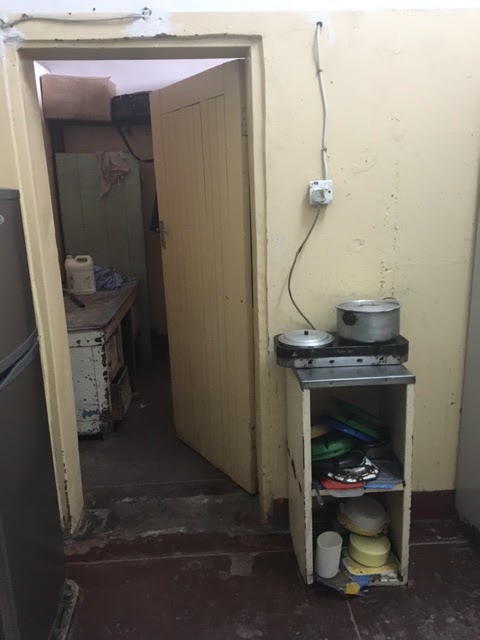
(Staff room with hotplate)

(Yearly diagnosis chart in male psychiatry) 


Sunday, April 3, 2016

Where there is love, there is life.

We would first like to thank the amazing staff members from the Czech Republic for their time and patience. They are always keen in including us in rounds, using our critical thinking and overall increasing our confidence in postnatal and neonatal care.
Throughout the course of the week we were able to revise some informative materials throughout the ward, and put resources to use throughout the hospital. We hope the information we shared with the students and staff on the ward will continue to strengthen their practice and be sustainable for the years to come. 

We would also like to add that after long hard hours we all spent fundraising, it was amazing to see the money put to good use in practice. Brand new curtains on the postnatal ward were installed, so the mothers could have some privacy. We were informed due to these curtains, it has been noticed that the health professionals on the ward have more "pep in their step," carry more pride, and keep the ward cleaner on a daily basis. 

Finally, it was truly amazing to see the resilient mothers who delivered healthy babies, in and out of the post natal ward within 6 hours or less. 

Flight to Zambia- $2,400
Bus from Lusaka to Mongu- $15
Taxi to Lewanika General Hospital- $3
Scrubs- $40
The look a mother gives her newborn child- Priceless 

-Steph, Taylor & Rayane

Liyoyelo: reaching the community

For just two short days this week, we were placed at Liyoyelo Urban Clinic. Instead of spending the days assisting with the various clinics in the buildings, we decided to take an opportunity to go on a mini-outreach with a nurse midwife each day. Here, we did well-baby check-ups, weighing each child and giving essential vaccinations and medications as needed. We spent a lot of our time doing the paperwork for the midwife. Although it doesn't seem like much, we know we were able to help her complete her job more efficiently and see more people that day then she would have otherwise. 

Our office
It was very cool to nurse outdoors, with the scale hanging from a tree and little stools of goat hide for us to sit on. In the end, sometimes that is where the best nursing can happen. When you nurse in the hospital or a clinic, the patient has come to you and is in an unfamiliar environment. But when you go to their community and work in a common space, it's being present and allowing the community members to be comfortable. At one point on our second day, the nurse had the whole crowd in stitches as she addressed them all. These pieces of community involvement and allowing people to be comfortable with their nurse only helps the profession and leads to better follow-up care and adherence to physiological and pharmaceutical regime. 

Julianne and Mark

Kaande

This week brought our much-awaited teaching session with some of the students at Kaande Basic School.

As we wrote a few weeks ago, we met with the headmaster and a few teachers and were very excited to carry out some basic hygiene teaching with the students. We also had school supplies that Aberdeen Hall Preparatory School collected and donated to the teachers at Kaande.

When we arrived at the school, we wrestled a 60-plus pound suitcase containing the assorted classroom items from the road to the school through deep sand. A small entourage of primary school children accompanied us and encouraged us to "push, push, push" the massive bag.  When we finally arrived at the classrooms, some of the younger school kids were crowding around the door and hanging in the windows to see what we were doing!


Among the supplies brought by our nursing team was a collection of posters that had various images and facts about Canada, so we shared a little bit about our country with the students. We pointed out Kelowna on a Canadian map, we showed them pictures of beavers and geese and hockey, and we sang them our national anthem. In return they shared some of the sports that they played, some of their local animals, and sang us the Zambian national anthem.


Cass drew a poster of the 5 steps to hand washing:


We brainstormed with the kids about why it is important to wash our hands, times to wash our hands, and adaptations on hand washing based on available supplies. For example, someone suggested that when soap was unavailable, the grit in ashes from a fire offered a good alternative.

This was a challenging experience. The teaching that we had previously done was in a Canadian context with access to laptops, powerpoints, and electricity. However, in Zambia, we had to draw our posters and use available supplies. We relied on a translator to communicate our message to the students. And although we know that the school items collected by Aberdeen were helpful, it felt like it was only a drop in the bucket. There is so much need at Kaande, and in many schools in Zambia, that a suitcase of supplies seemed like pittance. But while it may have felt small, we hope that the items will make a difference for the students at Kaande and make learning more enjoyable and rewarding.


For us personally, it was eye-opening to see what school is like in another country. It was also a good opportunity for us to show initiative and make community connections in Zambia. We were able to use the leadership skills we have developed throughout the program (and especially during our fourth and final year of our degree). Reflecting back on our time at Aberdeen Hall and Kaande Basic School, we now realize that we too were learners in this experience, and we will remember this time as a rich and rewarding piece of our international practicum.

With one week left,

Cass, Laura, and Julianne


A Week of Waiting.. For Babies

This week I spent my time working on the labour and delivery ward at Lewanika General Hospital. Seeing as I started my perinatal specialty this past fall, I was excited to get into practice and get some hands on experience of what I'd learned during my course. 

I quickly saw how different the experience of labour and birth is here compared to Canada. The women here are strong and resilient. They come to the hospital alone, rarely make a peep when giving birth, all sans pain control. After the baby is born, the woman gets up, walks back to her bed, and goes home after about 6-8hours. 

I also learned that babies come when they want. On my last day, I took the initiative to ask the midwives if I could deliver a baby (along side them of course). They gave me a patient to look after, a young and single, first time mother. I monitored her throughout the day, providing her with comfort measures and helping where I could. I waited along side her for what felt like forever. Although, the pain of my waiting could not have even compared to the pain of hers. Finally around 1PM, the baby was ready to make her arrival into the world. I coached the mother, held her hand, and with the help of the midwife, delivered the baby into the world. It was the most amazing feeling, bringing new life into the world. The baby ended up having a couple complications after birth and inside, I was quite scared. I stayed strong for the mother, congratulated her and took the baby away for a few moments to deal with the issues. In the end, baby was healthy and happy, and the mother couldn't thank me enough. This made me feel quite good. It was also encouraging because I felt like I'd formed a relationship with the mother which I sometimes find difficult here, especially with the language barrier and different cultural practices. 

Overall it was a great week and I attained my goal of delivering a baby, and experience I will never forget.

~Hayley Muss 

My week in the OPD

This past week I had the privilege of working in the Out Patient Department (OPD) at Lewanika General Hospital. The OPD is equivalent to the Canadian version of the Emergency Room. I am so thankful for the many Medical Officers, Nurses, and Doctors that taught me so much about the journey of a patient from entering the OPD to being admitted on a floor.

The first thing that I noticed about the OPD is that the morning starts slow. However, as I learned Monday morning the "slow start" is really not an accurate picture at all. Once patients are allowed to enter the hospital they must get their medical card, and vitals before waiting to enter the treatment/screening room. First thing in the morning everyone is still getting their vitals done but by about 9:30 -10:00 you get an influx of patients that take over the OPD like a tidal wave.

The majority of patients do not pay the extra cost to be seen faster and therefore it is very challenging to see and treat all patients out of the one small main room. Patients that are severely sick will be rushed to the front of the line after having their vitals taken. In my experiences, patients that had a decreased level of consciousness were rushed to the front of the line. Despite being placed at the front of the line, the health care workers would address their "urgent" patient in an unhurried manner, sometimes waiting to have treatment started or to be reassessed.

But the Medical Officers and Doctors were so knowledgeable about the conditions seen routinely in the OPD. My one colleague taught me how to read and diagnose x-rays as they are one of the staple diagnostic tools available. I learned that symptoms and history are the key to diagnoses in Lewanika. I was given the challenge by one colleague to diagnose a client based on their symptoms alone and it took me most of an hour to finally provide them with my diagnosis. My colleague had diagnosed them in fifteen minutes and had sent the patient home with treatment in that time. The staff there are so gifted at developing differential diagnosis, and the amount of critical thinking involved in that was truly challenging but rewarding to learn.

Despite having limited resources and space the nurses are able to accomplish a variety of tasks such as cannulation, catherization, and giving medications to patients. The teamwork between the Doctors, Medical officers, and Nurses was evident as they worked in such close proximity to each other. I really enjoyed my time in the OPD and look forward to my week at Lilimunga.

Cheers,

Janeva